What Water Mitigation Involves
Water mitigation is the immediate work performed to control the spread and severity of water damage.
It can include stopping the water source, extracting standing water, protecting contents, removing unsalvageable materials, and establishing controlled structural drying.
Signs You Need Water Mitigation
- Active water entering the property
- Rapidly spreading water
- Saturated walls or flooring
- Water beneath carpet or flooring
- Wet insulation or wall cavities
- Significant moisture after flooding
How the Work Is Done
The process starts with an inspection to identify the water source, affected materials, and moisture migration.
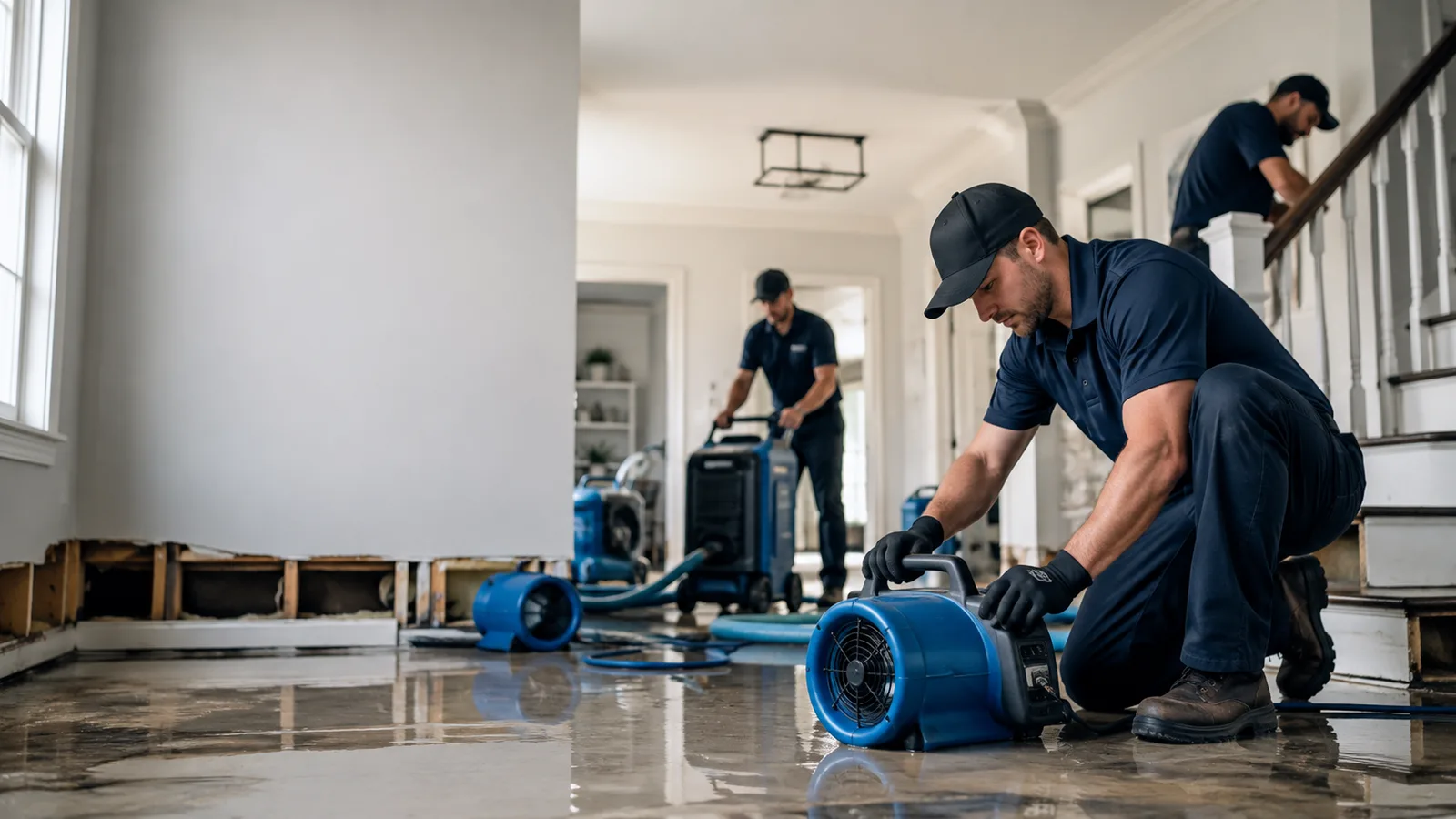
The water source is controlled first. Standing water is then removed with pumps and extraction equipment.
Moisture readings are taken from affected materials. Air movers are positioned to increase evaporation, while dehumidifiers remove moisture from the indoor air.
Selective demolition may be required when materials cannot be dried effectively. The preferred approach is to preserve materials whenever practical, but heavily saturated drywall, insulation, or carpet padding may require removal.
Drying continues while technicians monitor moisture levels until affected materials reach an appropriate dry condition.
What Drives the Cost
Mitigation costs depend on affected area size, water volume, water category, material construction, accessibility, equipment quantity, drying duration, demolition, and contents handling.
Restore Pro provides professional water mitigation throughout the United States.