What Water Damage Cleanup Involves
Water damage cleanup removes standing water, debris, damaged materials, and affected contents after leaks, flooding, or plumbing failures.
Water can travel underneath flooring, behind baseboards, into drywall cavities, and beneath cabinets, so visible cleanup alone may not address the full affected area.
Signs You Need Water Damage Cleanup
- Standing water or pooling
- Mud or sediment after flooding
- Wet carpet or padding
- Swollen baseboards or drywall
- Damaged furniture or contents
- Persistent musty odors
How the Work Is Done
Technicians begin with an inspection and moisture assessment. They identify the water source, affected areas, and condition of the materials.
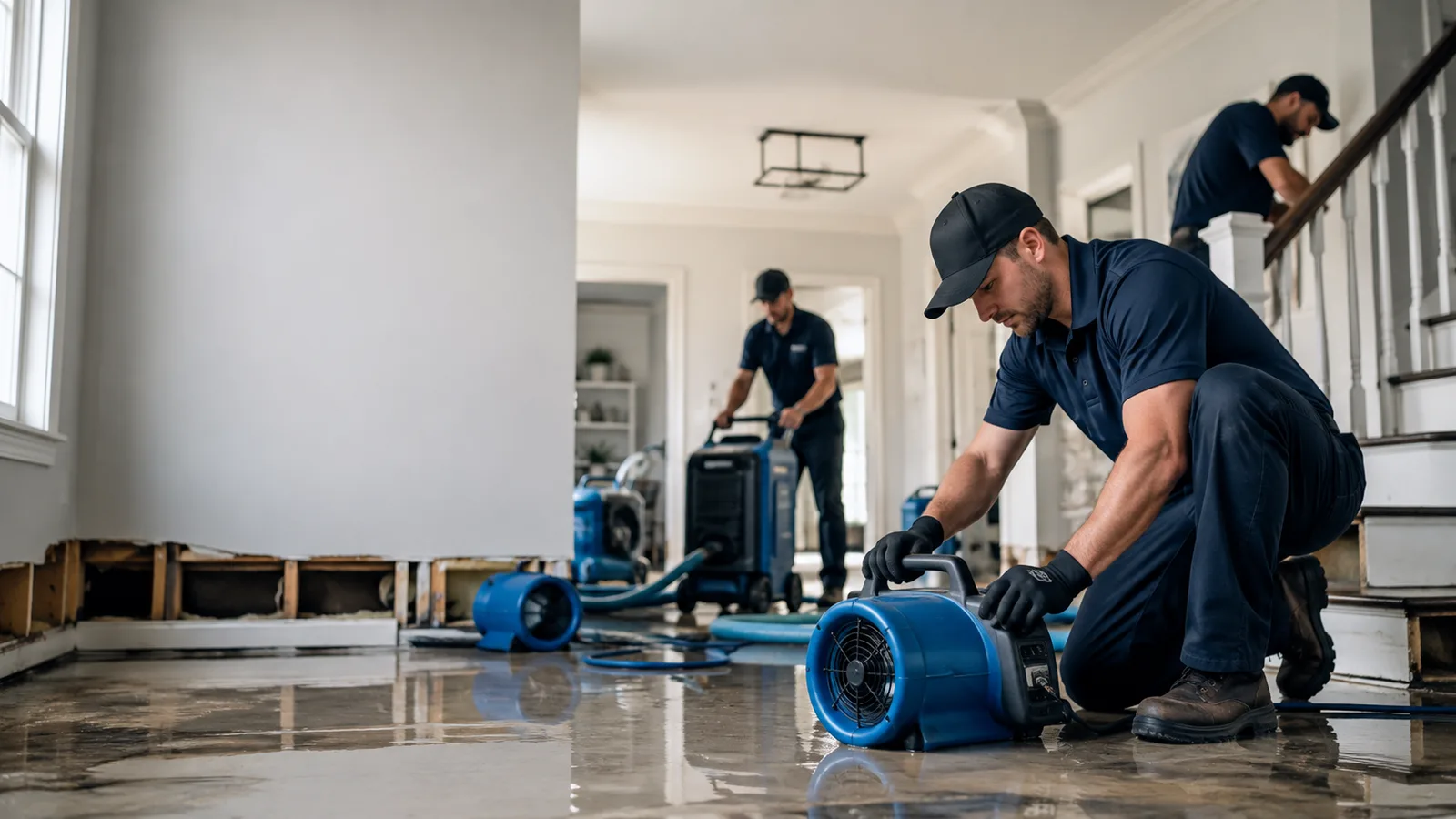
Standing water is removed with pumps, truck-mounted extraction systems, or portable extraction equipment.
Saturated carpet padding may need to be removed, while salvageable carpet can often be professionally extracted. Damaged drywall, insulation, and other porous materials are selectively removed when they cannot be properly dried or cleaned.
After extraction and cleaning, air movers and dehumidifiers are used to control remaining moisture.
What Drives the Cost
The main cost factors include affected square footage, amount of water, contamination level, material type, accessibility, demolition, contents handling, equipment duration, and disposal requirements.
Restore Pro provides water damage cleanup throughout the United States.