What Structural Drying Involves
Structural drying removes remaining moisture from building materials after water extraction.
The goal is to dry affected floors, walls, ceilings, framing, subfloors, and other structural components before prolonged moisture causes additional damage.
Signs You Need Structural Drying
- Wet drywall after water extraction
- Damp wood framing
- Moisture trapped beneath flooring
- High indoor humidity
- Wet insulation
- Persistent damp or musty conditions
How the Work Is Done
Technicians begin with moisture mapping using professional moisture meters and other inspection equipment.
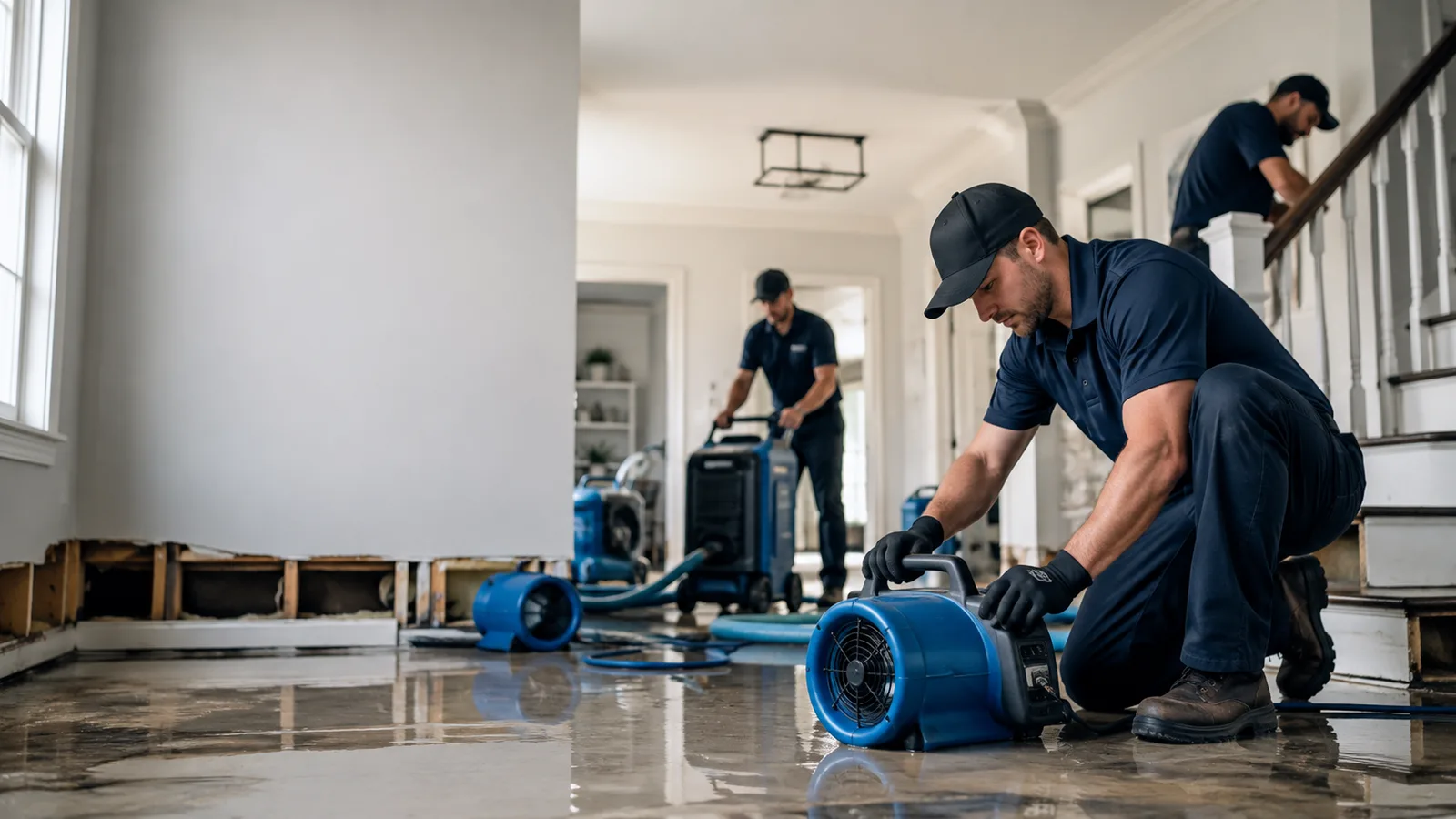
After bulk water has been extracted, air movers are positioned to increase evaporation from wet surfaces. Dehumidifiers remove the moisture from the indoor air.
Low-grain refrigerant dehumidifiers are commonly effective in residential environments. Desiccant dehumidification may be appropriate for certain low-temperature, high-humidity, or large-loss conditions.
Technicians monitor moisture levels during the drying process rather than relying on equipment run time alone.
If materials cannot be effectively dried in place, selective demolition may be necessary to expose concealed areas.
What Drives the Cost
Structural drying costs depend on affected square footage, material type, moisture level, building construction, accessibility, equipment quantity, drying duration, temperature, humidity, and whether demolition is required.
Restore Pro provides professional structural drying throughout the United States using commercial air movers, dehumidifiers, and moisture-monitoring equipment.