Ceiling water damage often comes from roof leaks, plumbing problems, overflowing fixtures, or water from an upper floor. Water can travel through the ceiling cavity before stains or other damage become visible.
What the Job Involves
The ceiling is inspected for stains, bubbling paint, sagging drywall, soft areas, and moisture. The source of the water is identified, and affected ceiling materials are assessed to determine whether they can be dried or need removal.
Signs You Need It
- Brown or yellow ceiling stains
- Bubbling or peeling paint
- Sagging drywall
- Damp or soft ceiling areas
- Dripping water
- Musty odors
How the Work Goes
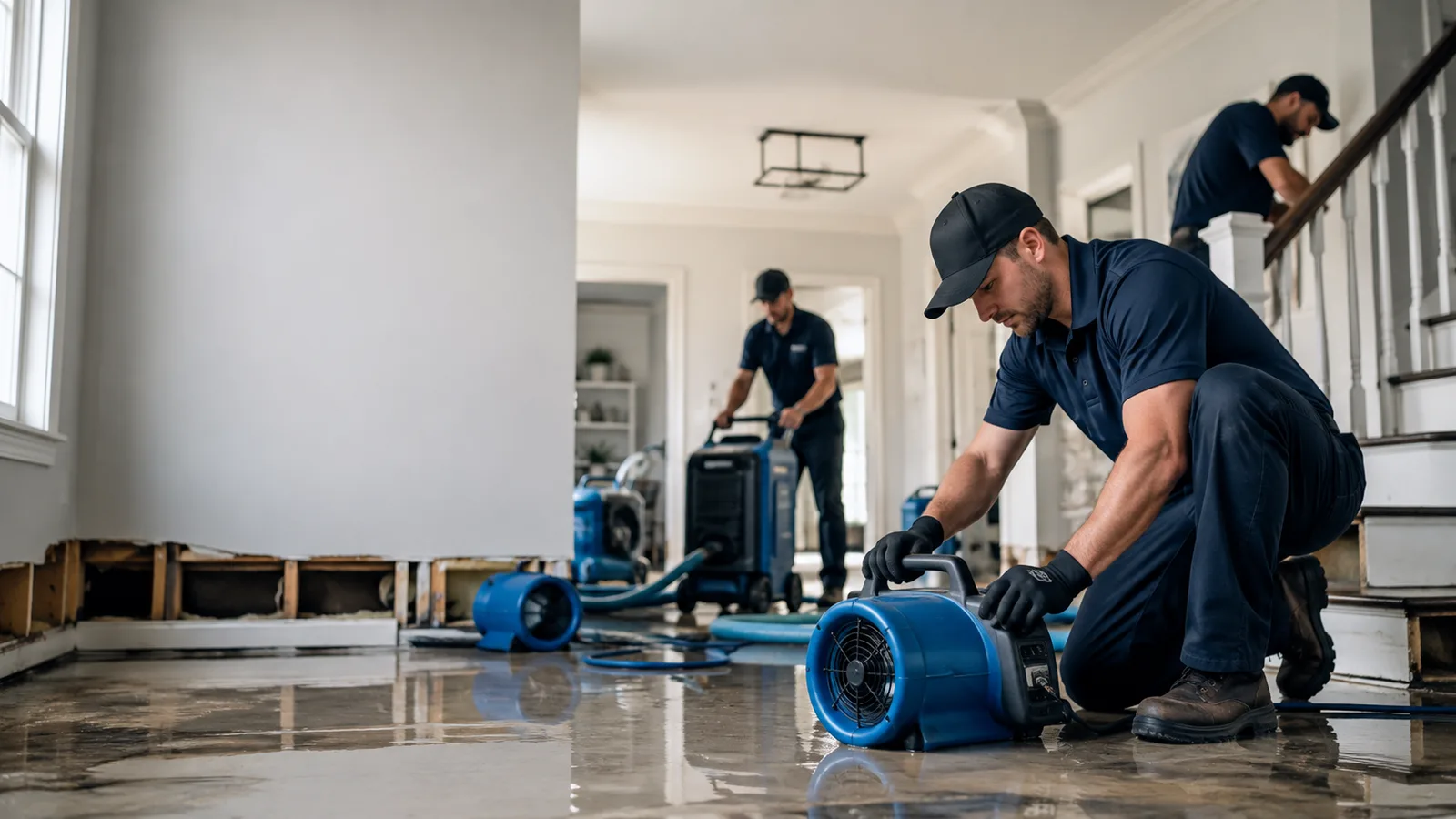
The water source is addressed first. Moisture readings are taken around the damaged area, and standing water is removed when necessary. Damaged drywall may be carefully removed to expose wet cavities, followed by structural drying with air movers and dehumidifiers.
What Affects the Cost
Cost depends on the size of the damaged ceiling, source of the leak, amount of moisture, ceiling height, drywall condition, insulation, and extent of repair required. Structural or electrical damage can require additional work.
For ceiling water damage restoration in East Stroudsburg, PA, call Restore Pro at (951) 433-4147 for an inspection and restoration assessment.